
Chapter 6
Integrate patient-generated health data
In this chapter
Learn how to:
- Take steps to track patient-generated health data
- Improve preventive care by efficiently collecting family histories
- Use patient portals, APIs, and other health IT to systematically collect patient-generated health data and harness them to improve clinical care and patient health
Historically, clinicians have had limited access to patients’ health and well-being data. They’ve made do with information collected during patient visits, like self-reported lifestyle habits and family health histories.
Today, research shows that factors outside the clinical setting — socioeconomic, environmental, and health behaviors — all play a role in people's health and well-being. Patients and family caregivers are often the best sources for getting health and well-being data, including patient-generated health data. These data can be integrated into patients’ EHRs and support doctors’ decision-making for better care, prevention, better health outcomes, and lower costs.
A nationwide survey of adults by the National Partnership for Women & Families found that patients want more than just electronic access to view their health information. Patients also expect to be able to communicate with their providers and to share patient-generated health data about their health and conditions in real time. They expect to be partners in their care, with access and sharing in both directions.80
Today, health IT is transforming our ability to collect and integrate accurate, reliable patient data from different sources into EHRs. Clinical practices can use portals and application programming interfaces (APIs) to integrate patients’ health data from devices, remote monitoring, wearables, and more. Each year, the U.S. Core Data for Interoperability (USCDI)—the minimum, standardized set of structured data elements that certified EHR technology must integrate and exchange—adds more data elements capable of collecting patient-generated health data, such as Family Health History, Reported Medication, Pregnancy Status (i.e., the intent to become pregnant), Nutrition & Diet, SDOH Problems/Health Concerns, and Travel Information.81 In addition, the best practice is for clinicians to collect and record the patient’s self-reported values for certain health data, such as race, ethnicity, sexual orientation, gender identity, disability, and pregnancy status.82
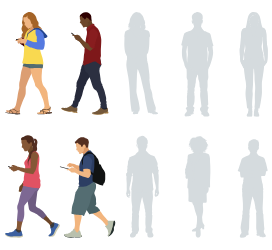
In 2017,
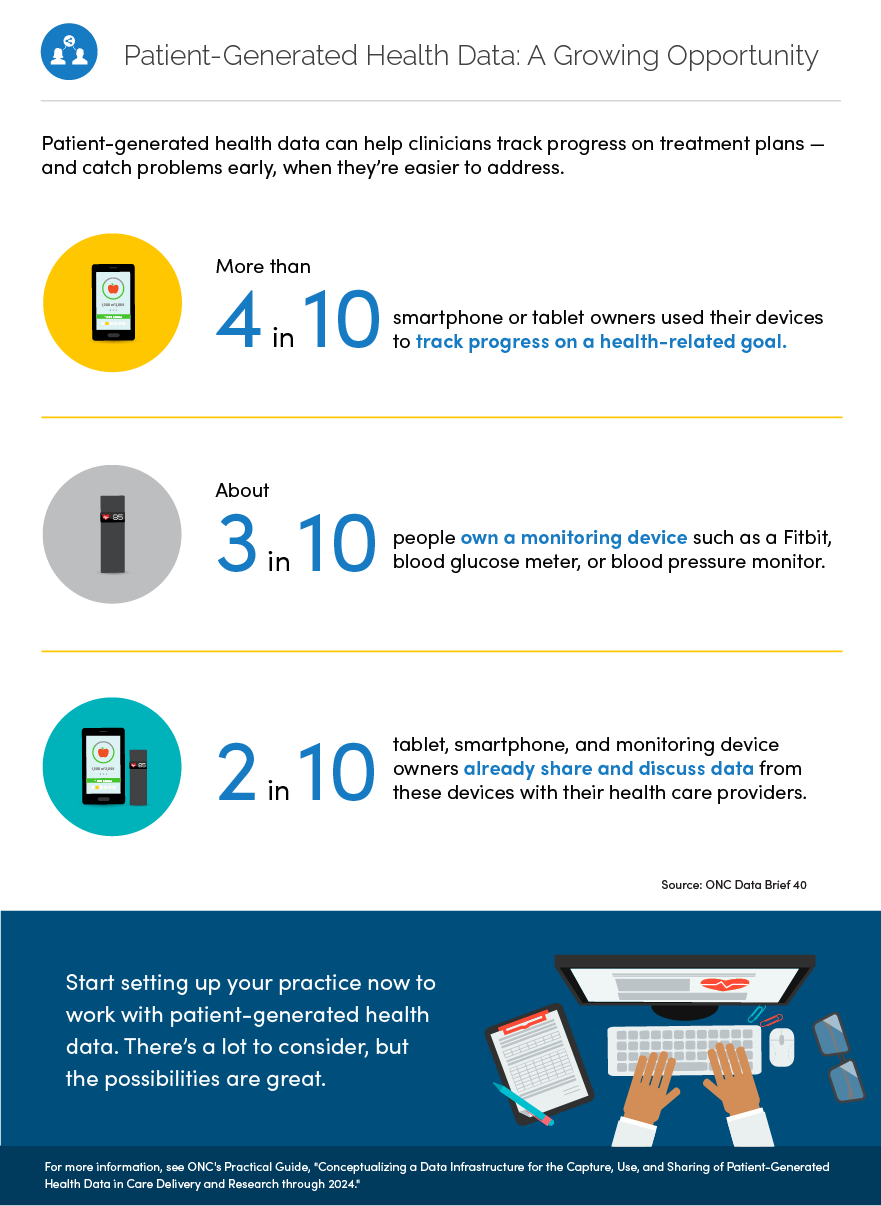
More than
4 in 10
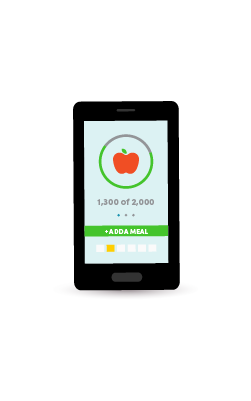
smartphone or tablet owners used their device to track progress on a health-related goal.83

In 2020,
More than
HALF
of these individuals used their mobile health app to facilitate discussions with their health care provider.

Using technology, patients can also share information that’s critical for health care decision-making but often too time-consuming or cumbersome for clinicians to gather — like family medical histories. What’s more, patients can provide these data from home, so that clinicians can maximize precious office visit time. At home, patients and family caregivers can refer to actual records and data rather than fill out forms from imperfect memory in the doctor’s office.



6.1 Track patient-generated health data
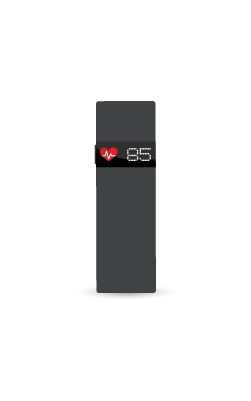
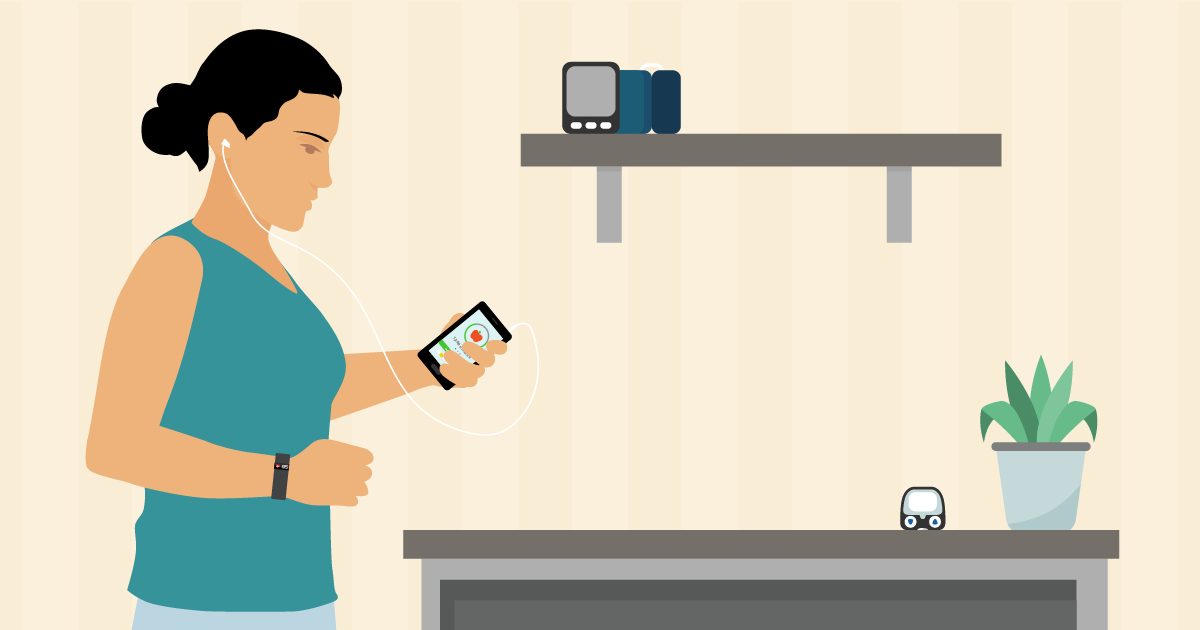
Across the nation, patients’ phones, computers, and personal health devices are teeming with patient-generated health data: health-related data that patients create, record, or gather to help identify and address a health concern. They include:
- Health history
- Treatment history
- Patient-reported outcomes
- Medication adherence
- BBiometric data, such as blood pressure, temperature, weight, and blood glucose levels
- Symptoms, such as nausea, headaches, and diarrhea
- Advance directives and birth plans
- Lifestyle choices, such as diet and exercise85, 86
As the amount of available data has grown, so too has our ability to collect, organize, and make sense of it all. More and more health systems are aggregating patient-generated health data in their EHRs and relying on these data to conduct remote monitoring — that is, to track patients’ health and wellness outside the clinic.
Clinicians can take advantage of these patient-generated health data to fill information gaps between appointments — and, ultimately, improve clinical decision-making, care delivery, and health outcomes.
The results are real for practices as well as patients:
- Fewer hospital readmissions, which can help avoid penalties for excessive readmission imposed by Centers for Medicare & Medicaid Services87
- Efficient diagnosis of illnesses, which saves practice resources
- Enhanced patient-centered care, so that clinicians can identify treatments and health behaviors that patients will follow through with
- Effective management of complex chronic conditions, so that patients can control their own health with less clinician intervention

“Using these tools — a wireless scale and bracelet-style activity tracker — my doctors and I have been able to assess intervention effectiveness, adjust dosages, unearth side effects, and clarify decision points.
Without the objective measure provided by my activity tracker, we would be basing our decision on my subjective assessments of getting worse… By putting my data to work for me, we can now do better.”
— Donna Cryer, liver transplant survivor88
Options for Integrating Patient-Generated Health Data
Across practices and electronic health records, it varies how EHRs integrate patient-generated health data and whether and when patients could write data directly to the EHR (e.g., research study data), or whether health system review and prior approval were required to authorize the data to be written into the EHR (e.g., patient-submitted corrections or amendments to the medical record).89 90 91
Patient Reported Outcomes
Patient reported outcomes are outcomes reported directly by the patient, such as symptoms, changes in symptoms, and effects of treatments. Patients might report these outcomes in person during an office visit, or through a patient portal as patient-generated health data. Collecting and tracking patient reported outcomes in real time can increase patient engagement and patient-provider partnership, improve care, and decrease emergency department visits and hospitalizations.
For example, see Advancing the Collection and Use of Patient-Reported Outcomes (PROs) through Health Information Technology, or see below for another example of patient reported outcomes in cancer care.
Navigating Patient Reported Outcomes in Cancer Care 92
Overview
A toolkit to increase the adoption of patient reported outcome (PROs) across federal agencies
Who it's for
Clinicians
When it's used
As a part of a patient’s cancer care to integrate their voices into their care plans
Download the Navigating Patient Reported Outcomes in Cancer Care Toolkit [PDF - 392 KB]
Incorporate Patient-Submitted Corrections and Amendments to the Medical Record
The HIPAA Privacy Rule requires that patients be able to submit corrections and amendments to their designated record set.93 These are quintessential patient-generated health data, for better data integrity and quality, better patient safety, and better treatment and care coordination.
Tips for Clinicians
Clinicians can use patient-generated health data to:
- Show how a patient is doing in real time between visits
- Illustrate a patient’s health and behavior over time
- Inform strategies for preventive care and chronic disease management
- Improve patient safety by providing insight into medication adherence and allergies94
- Spark and support conversations with patients that result in shared decision making95
- Predict hospital readmission risk
- Build patient engagement!
Portals can streamline data collection by giving patients a platform for securely sharing information and completing online questionnaires. As patients use portals more for these actions and gain a greater awareness of their health, they become more engaged. Clinicians, in turn, can use the portal to send patients reminders to submit data and to follow up with their patients as needed.
Tips for Practice Administrators
Consider taking steps to integrate patient-generated health data into your practice:
- Talk to staff about how patient-generated health data can improve care and efficiency
- AAssess what patient-generated health data you’re already gathering and what additional data would be valuable
- Develop policies and procedures, like when to accept data and who will review them
- Educate patients and families about the value of and expectations for sharing patient-generated health data
- Start small — for example, by launching a pilot to collect symptoms for patients managing a chronic disease — and make changes as needed96
Patient-Generated Health Data Practical Guide
Overview
Document detailing best practices identified from 2 pilot demonstrations that tested concepts for the use of patient-generated health data in clinical care and research settings
Who it's for
Clinicians, researchers, health IT professionals, and health care administrators
When it's used
To learn suggested practices and questions to consider when implementing the capture, use, and sharing of patient-generated health data
Download the Patient-Generated Health Data Practical Guide [PDF - 392 KB]
Center for Black Women's Wellness | From the field

The Center for Black Women’s Wellness (CBWW) is a community-based, family service center committed to improving the health and well-being of underserved Black women and their families.
CBWW has a small community health center and provides a secure patient portal to help engage its patients in their health care and wellness. The portal enables patients to access and view their health data, and it enables patients to connect with their health team between office visits so they can contribute vital updates and data in real time—patient-generated health data. For example, patients can:
- report new medications that they are taking and request refills;
- report new health problems and changes to existing health problems;
- report new immunizations and changes to existing immunizations;
- report new allergies and changes to existing allergies; and
- send messages to their health team and request appointments.
Patients can participate and help their health team with better information for better care.
In the waiting room, the community health center runs an informational video to share with and motivate patients to use the many resources the patient portal can provide. The video not only illustrates access to existing health information but also focuses repeatedly on how a patient can add new health data across the tabs or propose corrections to existing data.
Click on the video above to learn more.
“Knowledge transforms lives; when patients and families understand their health, they gain the confidence to take charge of their wellness journey.”
— Fabian Appling, Clinical Operations Manager
Ochsner Health System97 | From the field
“In the past, we relied on patients to log information, bring it to us, and then we would input the data and decide a course of action. Now we can share information seamlessly between patient and physician to allow real-time, accurate analysis of a patient’s health status.”
— Robert Bober, MD, Director of Cardiac Molecular Imaging, Ochsner Medical Center
Ochsner Health System (OHS) is advancing the use of patient-generated health data through partnerships with Apple and its EHR developer.
Since October 2014, OHS has leveraged Apple HealthKit to create a more comprehensive picture of ongoing patient health. HealthKit, an iOS app, acts as a health dashboard by capturing health and activity data from other apps and wearable devices, like FitBit and Withings wireless blood pressure monitor. 98 Healthkit also has an open API (application programming interface), which enables other web applications to access its data. Using the API, OHS connected HealthKit to its EHR. As a result, OHS patients can automatically import HealthKit data into their EHRs and share it with clinicians.99
OHS piloted this integration in its Digital Medicine Program. The Digital Medicine Program, which focuses on patients with hypertension, uses remote monitoring to collect data including body weights and blood pressure measurements — all without patients leaving their homes. Clinicians and pharmacists see the data and follow up with patients in real time by, for example, adjusting their medications or tailoring lifestyle recommendations.100 One year in, OHS patients reported improved outcomes, engagement, and satisfaction with their care.
“For the first time in my life, I feel a sense of peace and comfort knowing that I’m under constant supervision and receiving high-quality care with little effort throughout my daily routine. This is the way health care should be.”
— Andres Rubiano, 54 year-old Digital Medicine Program patient who suffers from hypertension
The Center for Connected Health (CCH) implements programs rooted in connected health, a care model that uses information and communications technology — like mobile phones, computers, and wearable devices — to support patients’ health without disrupting their day-to-day lives.
CCCP cut heart failure-related hospital readmissions in half.
CCH’s Connected Cardiac Care Program (CCCP) showcases this approach. CCCP aims to improve self-management in heart failure patients at risk for hospitalization by combining:
- Regular clinical care
- Patient education
- Remote monitoring of indicators like blood pressure, heart rate, and weight
- Timely care and clinical feedback103
Clinicians used a central database to track all patient data. Data were also captured in patients’ EHRs.104
CCH conducted a retrospective study that evaluated the 4-month program105. At the outset, patients in the intervention and control groups had similar hospitalization rates. But for the duration of the program and up to 3 months after, hospitalization dropped significantly for patients enrolled in CCCP compared to those receiving typical care. CCCP patients also experienced significantly lower mortality rates during the program and for up to 4 months after discharge.106, 107
In addition to clinical outcomes, CCCP improved patients’ understanding of heart failure and self-management skills.108 These skills suggest a long-term payoff — even if patients have limited time in the program, they can still expect benefits down the line.
Clinicians come out on top, too. Even though CCCP costs $1,500 per patient, clinicians ultimately save $8,155 per patient from reductions in hospitalizations.109
“With our hospitals liable for thirty-day readmissions through CMS penalties, such interventions are becoming mainstay in the management of high risk patients.
As health technologies become more accessible and commoditized, programs like Connected Cardiac Care will be more affordable, and achieve an obvious return on investment.”
— Joseph C. Kvedar, MD, Vice President, Connected Health, Partners HealthCare
6.2 Collect family histories
“My goal over the past year has been to have the family history for most of my patients completed at least involving all first degree relatives. I did not find that this caused extra work or took much extra time – in fact it saved time and provided me valuable information for my practice.”
— Dr. Bruce Peyser, Medical Director, Pickett Road Clinic
Family health history can help predict a patient’s disease risk — essentially, it’s the simplest and least expensive form of genetic assessment.110 Traditionally, collecting and analyzing this information hasn’t been a routine part of primary care because of challenges like patients’ lack of knowledge (or memory lapse) about family history and clinicians’ limited time.
Now, technology-driven tools are changing the standard of risk assessments. For example, as mentioned above, the USCDI includes a Family Health History data element to help collect, use, and exchange standardized, structured data about patients’ family health histories. These tools enable patients to systematically collect family health histories and report back to their clinicians. Patients can complete these health histories at home with relevant records at hand rather than try to complete them by memory in the waiting room, which ensures accuracy and detail. Practice administrators can synthesize the data in the EHR, and doctors can review in advance. Clinicians can then ensure high-risk patients get necessary screenings and specialist care.111
Tips for Practice Administrators
To collect family histories efficiently and effectively, consider taking these steps:
- Encourage patients to enter pertinent family history through the patient portal — so they don’t have to recall family details during the visit
- Ask medical assistants to review family history before a visit — so clinicians know the results before the patient visit and don’t waste valuable visit time collecting that information
- Conduct clinical training about how to recognize genetic diseases and manage high-risk patients112
MeTree113 | From the field
The Genomedical Connection — a consortium between Duke University, the University of North Carolina at Greensboro, and the Moses Cone Health System in Greensboro, North Carolina — developed MeTree, a computerized self-administered family health history collection tool.
MeTree helps individuals have challenging conversations with loved ones about family health histories. It supports patients in collecting 3 generations of information on 48 conditions, including 20 cancers. The tool also generates a report for clinicians and patient-clinician talking points.
Clinicians can assess MeTree effectiveness by tracking appropriate screenings (like those for breast, colon, and ovarian cancers), testing for hereditary thrombophilia, and referrals to genetic counseling.114
By leveraging Fast Health Interoperability Resources (FHIR) — a new standard for exchanging health care information electronically115 — MeTree will soon connect to patients’ EHRs and allow patients and clinicians to seamlessly access this information.116
Disclaimer: “From the field" examples are provided for informational purposes to illustrate a range of real-world implementation approaches. References to specific organizations, products, services, or technologies do not constitute or imply endorsement, recommendation, or preference by the U.S. Department of Health and Human Services or the U.S. Government. Inclusion of an example should not be interpreted as indicating that the approach is appropriate for all settings or circumstances.
Chapter 6 Recap
Improve clinical decision-making by leveraging technologies to:
- Track patient-generated health data
- Collect family histories
- Engage patients in their health and their care
Content last updated on: July 30, 2026